

To start watching football in India, pick one match that fits your routine, check its Indian broadcast listing, and learn the basics as you watch. You can enjoy your first game without choosing a club immediately or memorising every rule. Build from one match, one conversation and one reason to come back.
- Start with one fixture: check the date, kick-off time in IST and viewing access.
- Learn while watching: focus on the score, the clock and how attacks develop.
- Explore before choosing: try club, international and local football.
- Find your people: watch with someone who welcomes beginner questions.
- Make fanwear personal: choose a design when a player or club means something to you.
1. Choose your first football match around your routine
Begin with a game you can actually sit down to watch. Ask a football-following friend which upcoming fixture they plan to see, or browse a competition’s official fixture list. An ordinary league game is a perfectly useful introduction; your first match need not be a final.
Check that the listed time is Indian Standard Time. Pay attention to the calendar date for kick-offs after midnight. Before buying a viewing subscription, confirm the competition, the specific fixture and the plan that includes it on the authorised Indian broadcaster’s listing.
If the timing clashes with college, work or sleep, look for an official replay or highlights. Start with those, then try a full match when convenient. Highlights show selected moments; a full game lets you follow the quieter passages between chances.
2. Learn the football rules that help you follow the action
For your first standard eleven-a-side match, concentrate on these basics. Leave the detailed tactical vocabulary until you have seen a few examples on screen.
- The clock: standard matches have two 45-minute halves, with a half-time interval and time added for stoppages. The final whistle need not come exactly at 90 minutes.
- The score: a goal requires the ball to cross the goal line completely, inside the goal, without an offence by the scoring team. The team with more goals wins.
- The cards: yellow signals a caution; red means a sending-off. A second caution during the match also leads to a sending-off.
- Offside: watch where an attacker is when a teammate plays the ball. In the opponents’ half, being nearer the goal line than both the ball and the second-last opponent can put them in an offside position. Position alone is not an offence; involvement in active play matters too.
When a decision confuses you, listen to the explanation and watch the replay. For offside, freeze the moment of the pass, rather than the moment the attacker receives it. That gives you a useful starting point for understanding the decision.

3. Separate clubs, national teams and competitions
A club and a national team are different teams. A player can appear for their club in club competitions and represent their country in international football. Following a player does not require you to choose between those two parts of the game.
Before kick-off, identify the competition and the stage. Is this a league fixture, a group match or a knockout tie? A league match can finish level. A knockout tie needs an eventual winner, but the method of deciding it depends on that competition’s rules.
Keep your starting list small: one club competition and an interest in India’s national teams or football near you. You can add more once the names become familiar. There is no need to monitor every table or transfer conversation.
4. Find a team and a football community at your own pace
Notice what makes you want to watch again. It might be a player’s movement, a team’s passing, a connection to a city or the friend who introduced you. Watch that team on another day before deciding whether the connection sticks.
During a match, occasionally look away from the ball. Follow a forward finding space or a defender tracking a runner. Ask one concrete question, such as why the team passed backwards, and look for the answer in the next phase of play.
Football can also be something you experience nearby. Check for a local match open to spectators, or join friends beside a neighbourhood turf pitch. Seeing the space between players from the touchline gives you another way to think about what happens on television.
Choose company that makes learning enjoyable. You should be able to ask a basic question, admire an opponent’s goal and admit you missed a match. Supporting a team can grow from shared afternoons and conversations, without a test of how much history you know.

5. Choose your first football t-shirt around that connection
Once a player or club gives you a reason to follow the next game, fanwear becomes a personal choice. Start with a design you would enjoy wearing away from the screen, then check the garment measurements and product details before ordering.
ThreadWair’s oversized football t-shirts offer a place to explore that choice. The designs are fan-inspired, not official merchandise. These are options to consider according to your interest:
- Messi Edition oversized t-shirt, if Messi drew you into watching football.
- Ronaldo Classic Fan t-shirt, if Ronaldo is the player you enjoy following.
- Neymar Jr oversized t-shirt, if your interest began with Neymar.
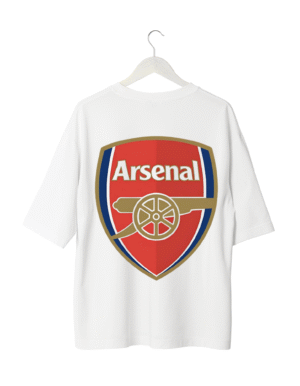
- Arsenal Football Club t-shirt, if Arsenal is the club you have connected with.
Take your time if you are still exploring. Wearing a football t-shirt can express an interest you already have; buying one is optional.
Shop the terrace
See all designs


6. Give yourself a simple plan for the next match
Before the next game, find the teams, competition and IST kick-off time. During it, follow one player for a few passages and note one decision you want explained. Afterwards, look up that question and check when either team plays again.
Repeat that routine while it stays enjoyable. Familiar faces, recurring patterns and conversations with friends give you something to recognise each time you watch.
Frequently asked questions
Which football league should a beginner in India follow?
Start with one whose matches fit your routine and that someone you know enjoys discussing. Try a few games before committing. Include Indian football in your exploration if a local connection appeals to you.
Should I watch highlights or full football matches first?
Highlights are an easy introduction. Then try a full match to see how chances develop and how teams respond between major incidents. Use whichever format fits your available time.
Do I need to choose a football club immediately?
No. Watch as a neutral, follow a player or explore football near you. A team preference can develop as you find reasons to keep watching.
How do I find where a football match is showing in India?
Check the competition’s official viewing information, then confirm the fixture on the authorised Indian broadcaster’s schedule. Verify the date, IST kick-off time and access requirements before making plans.
Do I need a jersey to watch football with other fans?
No special clothing is required to enjoy a match with friends. Wear what suits you. A fan-inspired oversized football t-shirt is an optional way to show your interest.
Fan-inspired football tees for matchday and every day after.
Browse the designs